The heart of Mexico, in every corner of the world.
The Virgin of Guadalupe: Meaning, December 12 and Mexican Folk Art
The Virgin of Guadalupe is the most loved image in Mexico. You will find her in churches, on home altars, on street murals and in folk art of every kind. Here is the story behind her, what her image means, and how artisans keep her close to the family.
Who is the Virgin of Guadalupe?
According to tradition, in December 1531 the Virgin Mary appeared several times to Juan Diego, an Indigenous man, on the hill of Tepeyac near Mexico City. As a sign, she left her image printed on his cloak (tilma), which is still kept in the Basilica of Guadalupe.
She appeared with dark skin and spoke in Náhuatl, so for millions of people she became a mother who looks like them. Today she is a symbol of faith, identity and protection for Mexicans everywhere.
Why is December 12 celebrated?
December 12 is the Feast of Our Lady of Guadalupe. Millions of pilgrims travel to the Basilica, families sing Las Mañanitas to her at midnight, and homes and churches fill with roses, candles and music.
Many families renew their home altar for the date, and it is a traditional moment to give an image of the Virgin as a gift or a blessing.
The symbols in her image
The rays of light around her mean she brings the light of God. The moon at her feet and the angel that holds her show she is above the old gods, and the stars on her blue-green mantle are said to match the sky of that December morning.
Her hands joined in prayer and the black ribbon at her waist (a sign of a woman expecting a child) make her a symbol of motherhood, hope and new life.
Guadalupe in Mexican folk art
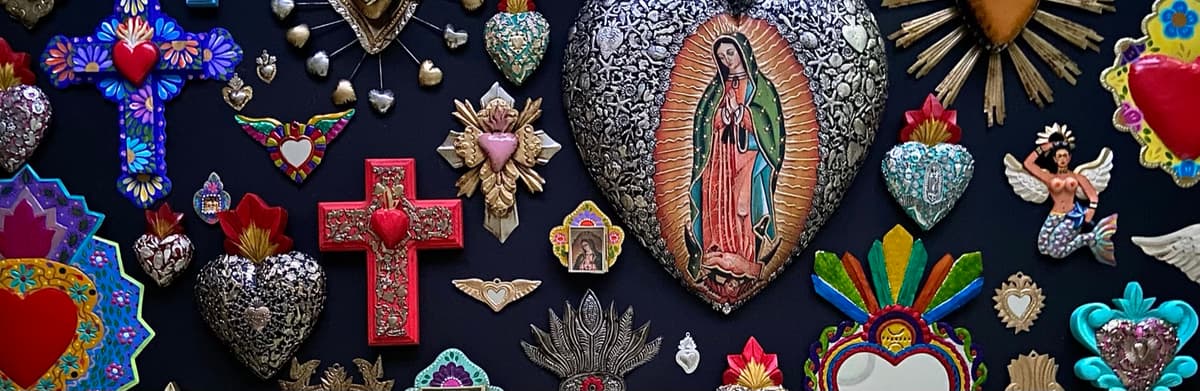
Artisans bring her into the home in many forms: tin nichos (small shrines) with little doors, hand-painted sacred hearts, carved wood retablos and crosses with milagros. Each one is cut, hammered and painted by hand, so no two are the same.
A Guadalupe nicho by the entrance or on a shelf is a blessing for the family. It is a meaningful gift for a new home, a baptism, a first communion, Mother's Day or Christmas.